PNGase F and Its Role in N-Glycan Analysis
PNGase F and Its Role in N-Glycan Analysis
Glycosylation is one of the most important quality attributes in biologics such as monoclonal antibodies, fusion proteins and therapeutic enzymes. N-linked glycans can affect how a biologic behaves in the body including its stability, activity and safety.
Why Analyze N-Glycans?
Glycosylation patterns can change depending on the cell line used, growth conditions or process changes. Regulatory agencies expect companies to monitor and control these variations to ensure:
- Product consistency
- Comparable quality (for biosimilars)
- Proper biological function
To get a full picture of glycosylation, scientists use several complementary methods.
Different Approaches to N-Glycan Analysis
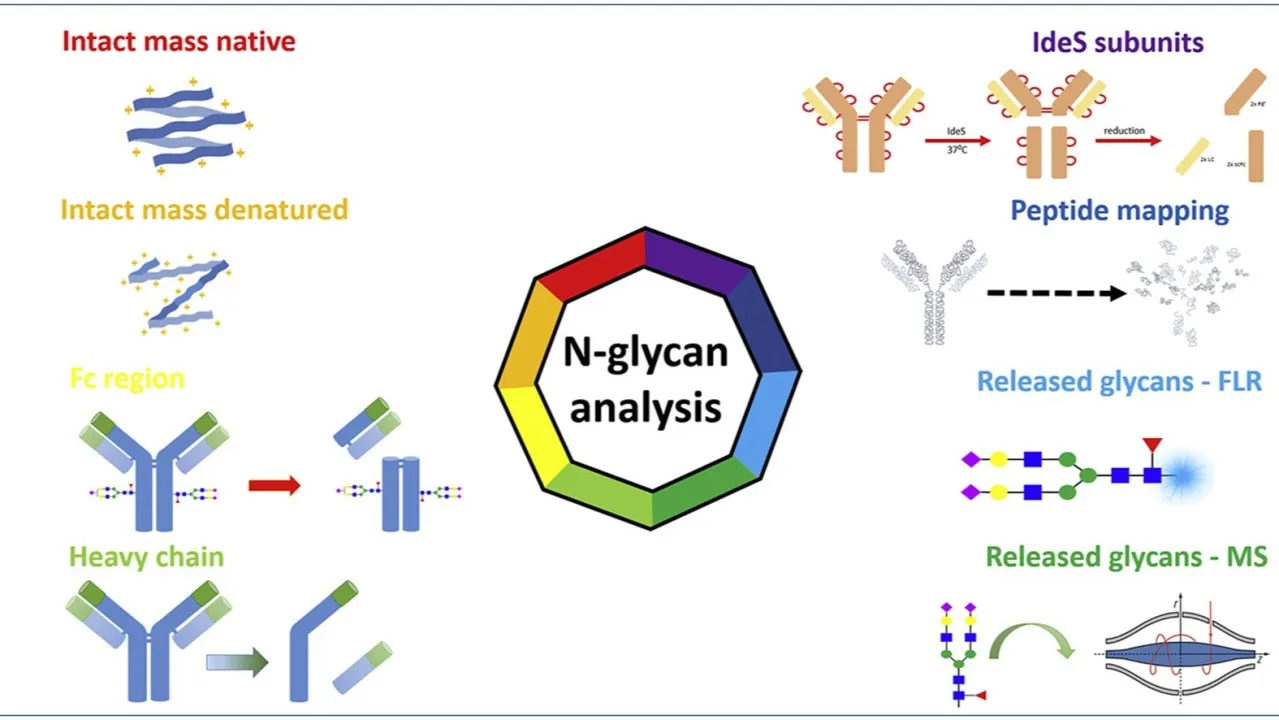
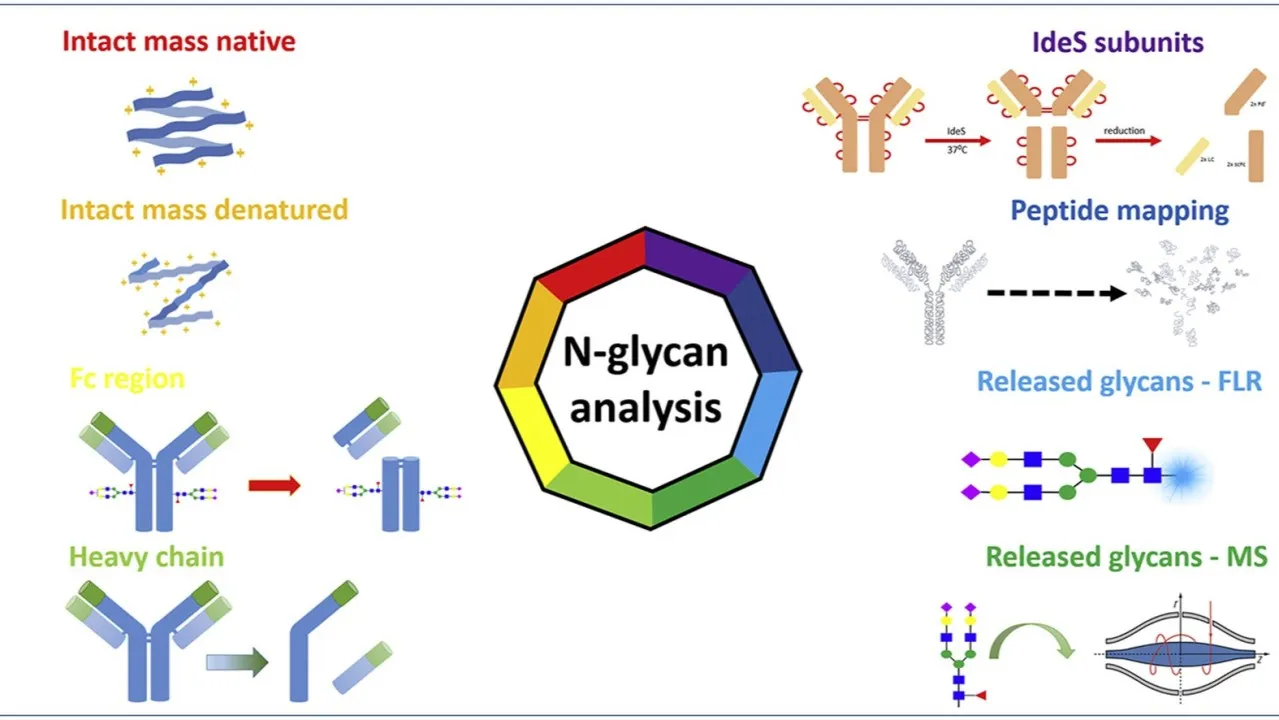
The diagram above shows multiple techniques used to understand the glycan profile of a biologic:
- Intact mass analysis (native or denatured): Gives a broad view of the molecule’s mass, including its glycan forms
- Fc region or heavy chain analysis: Focuses on parts of the antibody to better understand site-specific glycosylation
- Peptide mapping: Breaks the protein into smaller fragments to locate where glycans are attached
- Released glycan analysis: Involves removing glycans from the protein and analyzing them using fluorescence (FLR) or mass spectrometry (MS)
Each method provides different types of information. When used together, they give a detailed view of the protein’s glycan structure.
How PNGase F Is Used
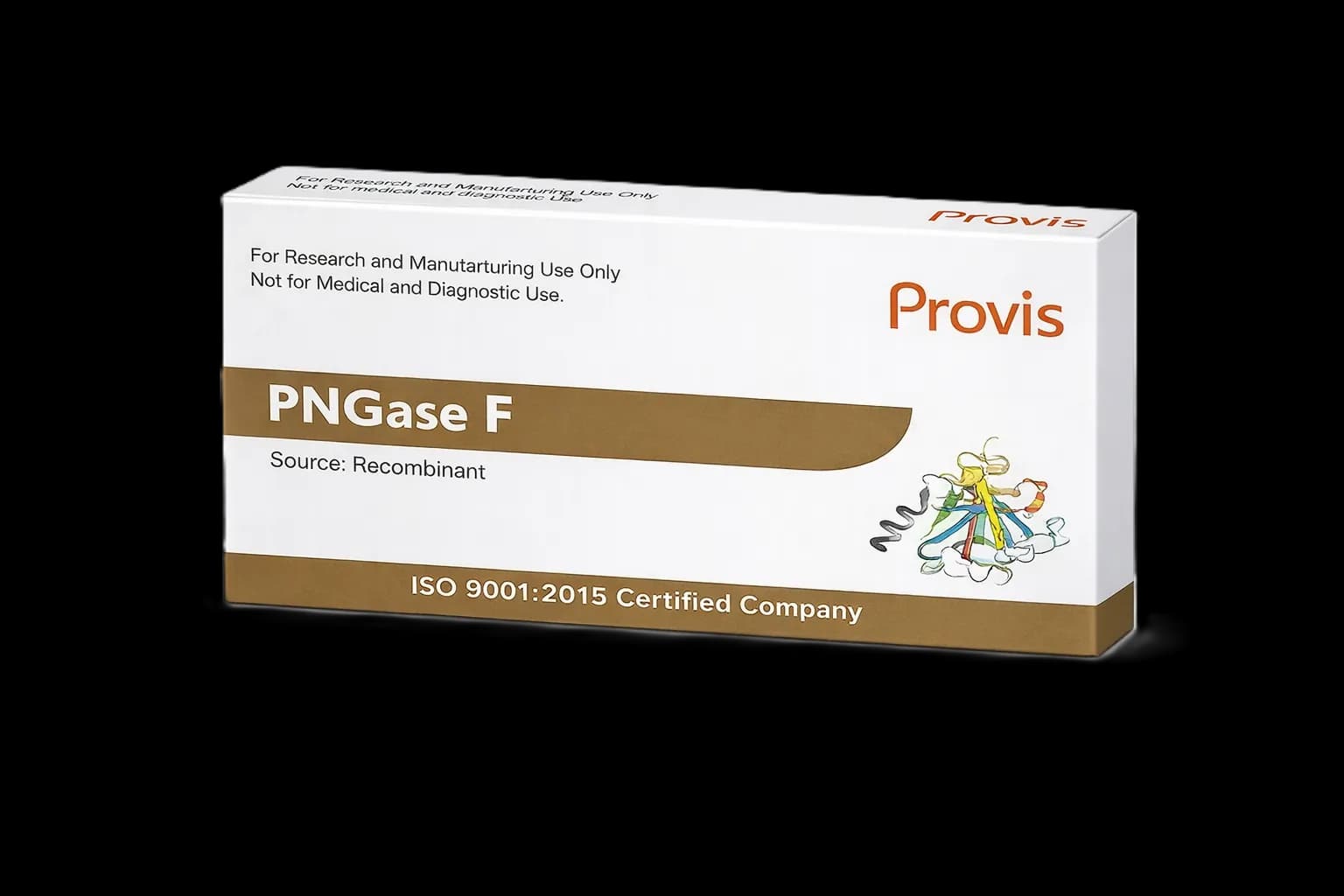
PNGase F is an enzyme commonly used in the “released glycan” step. It removes nearly all types of N-linked glycans from proteins by cutting the bond between the glycan and the asparagine (Asn) residue on the protein.
This released glycan can then be:
- Labeled with a fluorescent dye and analyzed
- Detected by Mass Spectrometry to understand its structure
- Used in peptide mapping to confirm glycosylation sites
PNGase F is used because it’s efficient, reliable and works under conditions compatible with most downstream methods.
Summary
N-glycan analysis is essential for understanding and controlling glycosylation in biologic products. PNGase F plays a key role in this process by enabling the release of N-linked glycans for further analysis. Whether the goal is quality control, comparability or structural characterization, this enzyme is a routine part of the workflow.
Stay Updated
Follow Provis Biolabs on LinkedIn for the latest biotechnology insights, product announcements and company news.